Movement · Updated 2026-11-21
Best Stretching and Mobility Apps (2026-2027)
Six stretching apps ranked on whether they get you moving for five minutes a day without a paywall or a lecture. GOWOD's free mobility library leads, Nike Training Club's classes are free if you'll make an account, and Bend is the simplest daily habit.
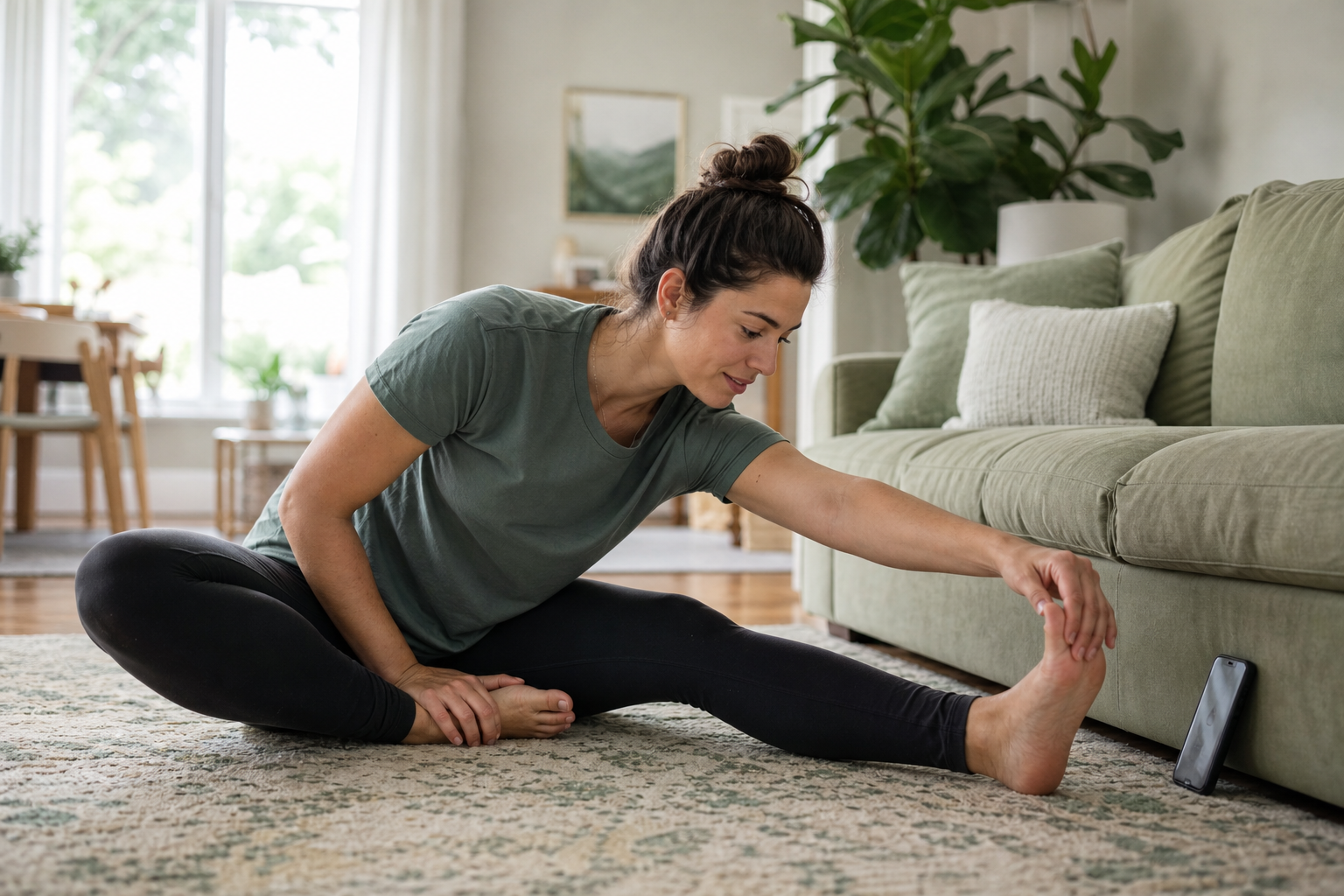
A stretching app has one job: get you down on the rug, or up from the desk, for a few minutes most days. That means short routines, clear demonstrations and no paywall in front of the basics. We checked six against their store listings, pricing pages, help pages and privacy labels, then used each free tier for a fortnight. GOWOD is first: its mobility test and library of more than 300 videos are free, and its Apple privacy label links nothing but contact details to you. Nike Training Club has the most free classes, at a privacy cost; Bend is the simplest five-minute habit; Stretchly looks after the desk.
GOWOD8.0/10
Best for: active people who want to know where they're stiff
GOWOD opens with a free mobility test, under fifteen minutes long, that maps where you're tight, and its library of more than 300 mobility videos is free for everyone. Premium adds personalised daily routines, recovery and activation protocols and progress tracking. The Apple privacy label links only contact details to you and lists nothing used to track you. The sports-performance language takes some looking past if you just want a looser back, and Premium is expensive.
What works
- Free mobility test and more than 300 free videos
- Apple privacy label links only contact info, with nothing used to track you
- iPhone, Android and Apple Watch
What doesn’t
- Premium is $124.99/yr, or $13.99 a month
- Personalised routines and progress tracking are Premium only
- Google Play's form lists app activity and device IDs shared with third parties
Price: Free tier; Premium $13.99/mo or $124.99/yr Platforms: iOS, Android, Apple Watch Developer site
Nike Training Club7.4/10
Best for: people who want a teacher on screen and don't mind an account
Nike Training Club gives Nike Members its yoga, Pilates, recovery and mindfulness classes for free, alongside the strength work it's known for, all led on video by Nike's trainers. The price is data: the Apple privacy label lists location, identifiers, usage data and sensitive information used to track you, and you need a Nike account to start. The iPhone app was last updated in May.
What works
- Yoga, Pilates and recovery classes free with a Nike account
- Trainer-led video classes
- Works with Apple Health
What doesn’t
- Privacy label lists location, identifiers, usage data and sensitive info used to track you
- No iPad version; on Apple devices it's iPhone and Apple Watch only
- iPhone app last updated in May 2026
Price: Free with a Nike Member account Platforms: iOS, Android, Apple Watch Developer site
Bend7.2/10
Best for: beginners who want one short routine a day
Bend is the simplest way into a daily stretch: short routines for mornings, desks, hips and hamstrings, reminders, and an Apple Watch app. The free tier is thin, though, with most of the routines behind a membership that the App Store lists at ten different prices, most of them marked as discounts. Its privacy label lists purchases, identifiers, usage data and diagnostics used to track you.
What works
- Short routines aimed at areas such as hips and hamstrings
- Reminders and an Apple Watch app
- Simple enough to use on the first morning
What doesn’t
- Most routines need a membership, at prices that vary by plan/region
- Privacy label lists purchases, identifiers, usage data and diagnostics used to track you
- Streaks and a 'Bendometer' consistency gauge on the dashboard
Price: Free tier; membership varies by plan/region Platforms: iOS, Android, Apple Watch Developer site
Stretchly7.0/10
Best for: anyone who sits at a computer all day
Stretchly is a free, open-source break reminder for Windows, Mac and Linux. By default it puts up a 20-second mini break every 10 minutes and a five-minute long break every half hour, each with a suggested stretch or movement, and you can postpone or skip when a call runs over. There's no account and no subscription, though a few extra settings are reserved for people who sponsor the developer. It is computer-only, and its ideas are a line of text rather than a demonstration.
What works
- Free and open source, with no account
- Sensible default breaks you can postpone or skip
- Runs on Windows, Mac and Linux
What doesn’t
- Computer only, with no phone app
- Break ideas are a line of text, not a demonstration
- Unsigned on the Mac, so the first launch needs a workaround
Price: Free (open source) Platforms: Windows, macOS, Linux Developer site
Down Dog6.8/10
Best for: people who'd rather stretch by way of yoga
Down Dog builds a new yoga practice each time you press start, set to your level, pace and length, and its Boost setting leans a session towards hips, shoulders, backbends or any of 19 body areas. It runs on phones, tablets and the web, saves practices for offline use and casts to a TV. There is no free tier: Down Dog's own FAQ says it moved to a short trial followed by a subscription in 2018, so we judged it on its listing, FAQ and privacy label rather than a fortnight's use.
What works
- A fresh practice every time, with 19 body areas to focus on
- Offline practices, plus casting to a TV
- Privacy label lists nothing used to track you
What doesn’t
- No free tier: a short trial, then a subscription
- Prices differ by store; Down Dog says its website is usually cheapest
- The new design adds streak goals
Price: Free trial; membership varies by plan/region Platforms: iOS, Android, Web Developer site
Stretching at Home6.2/10
Best for: people who want follow-along routines and can live with ads
Leap's stretching app has short, voice-coached routines with animations and video for mornings, bedtime, before and after a run, and the lower back, and you can build your own. The free version carries ads, its privacy label lists identifiers and usage data used to track you, and its listing promises no locked features before selling unlimited access. On Android it is called Stretch Exercise - Flexibility.
What works
- Voice coaching with animated and video demonstrations
- Morning, bedtime and running routines, plus your own
- Premium is cheap at $19.99/yr
What doesn’t
- Ads in the free tier
- Privacy label lists identifiers and usage data used to track you
- Listing says 'No locked features', then sells unlimited access from $4.99 a month
Price: Free tier with ads; Premium $4.99/mo or $19.99/yr Platforms: iOS, Android Developer site
The short version
Start with GOWOD's free test and video library, and ignore the Premium pitch unless you train for a sport. If you'd rather follow a teacher, Nike Training Club's classes are free in exchange for an account and a good deal of data. Bend is the easiest five-minute habit if you can live with its paywall, and anyone stuck at a desk should install Stretchly tonight. Five minutes most days beats an hour on Sunday.
Questions we get
Do I need an app to stretch?
No. A doorway, a wall and five minutes cover most of it, and plenty of good routines are free on YouTube. An app earns its place by reminding you, showing you how and keeping the session short enough that you'll do it again tomorrow.
How often should I stretch?
The American College of Sports Medicine suggests flexibility work on at least two or three days a week, holding each stretch for 10 to 30 seconds. Little and often is easier to keep than a long session you dread, which is why short routines and desk breaks finished well here.
Why isn't pliability on the list?
There's no free tier to live with: pliability offers a seven-day trial and then costs $19.99 a month or $179.99 a year. Its library is large and aimed at athletes, and its privacy label lists identifiers, usage data and diagnostics used to track you. GOWOD's free videos are a cheaper place to start.
Are stretching streaks worth keeping?
Not if they make a missed day feel like failure. Bend shows streaks and a consistency gauge, and Down Dog's new design sets streak goals. A stiff back doesn't care whether Thursday counted; aim for most days in the week and let the odd one go.
What if a stretch hurts?
Ease off. A stretch should feel like mild tension, not pain. Stop if something feels sharp, numb or tingly, and see a doctor or physical therapist before following an app's programme for an injured back, knee or shoulder.
Scores follow the Canyon rubric. Prices were checked on the date above; app pricing changes often. Written by Elaine Russo.